Our researchers are driving innovation across the entire hardware, software and network stack to make computer systems more reliable, efficient and secure.
From internet-scale networks, to next-generation chip designs, to deep learning frameworks and more, we build and refine the devices and applications that individuals, industries and, indeed, entire economies depend upon every day.
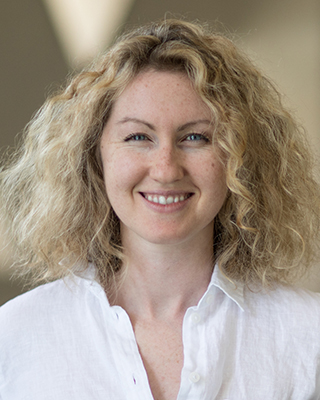
In their 2017 paper, Roesner and her co-authors were among the first to investigate end-user security and privacy perspectives on then-emerging smart home technologies and recommend ways to help users make more informed security decisions.
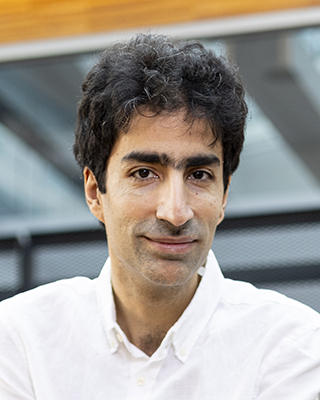
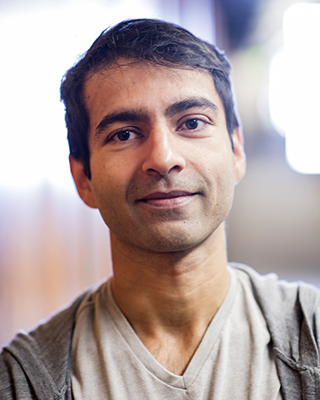
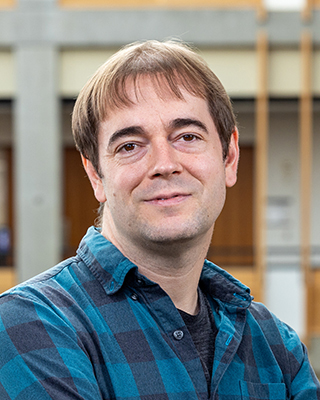
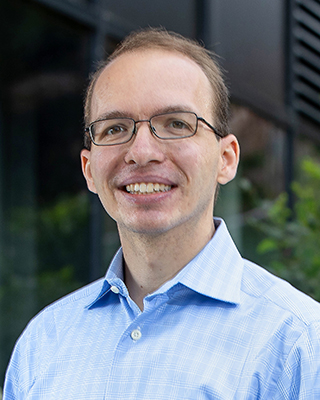
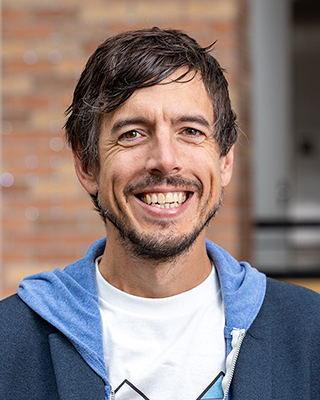
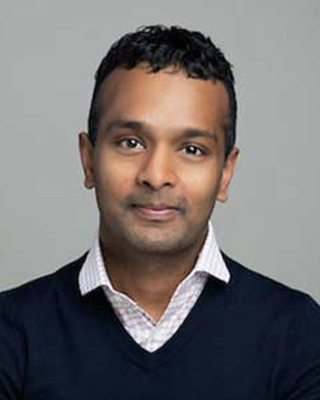
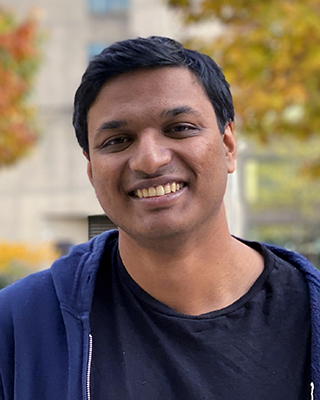
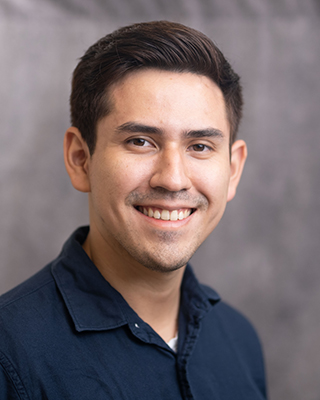
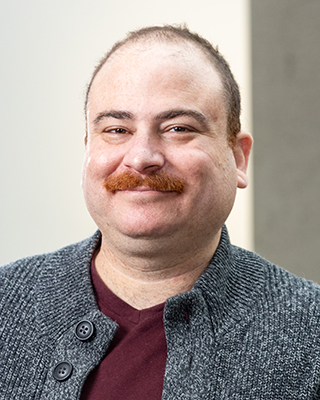
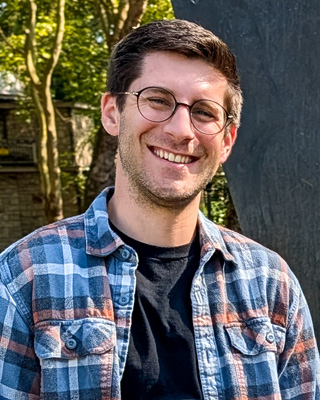
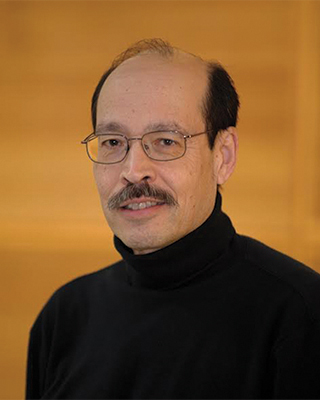
Professors Andrea Coladangelo, Matthew Golub, Ranjay Krishna, Chinmay Nirkhe, and Stephanie Wang are shaping the future of computing through projects spanning AI, systems, computational neuroscience, cryptography and quantum computing.
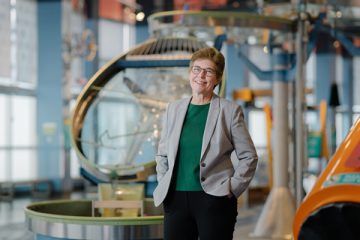
Murphy (Ph.D., ‘96), professor and former Vice-President Research and Innovation at the University of British Columbia, will lead the Vancouver, BC organization’s efforts to engage learners in STEAM (science, technology, engineering, art & design and math).
Our study of the theoretical foundations of computing spans algorithm design and analysis, complexity, optimization, cryptography, quantum and more.
We seek to answer fundamental and long-standing questions about the capabilities and limitations of our field, which has practical implications in economics, logistics, social welfare, transportation and many other real-world domains.
Professors Andrea Coladangelo, Matthew Golub, Ranjay Krishna, Chinmay Nirkhe, and Stephanie Wang are shaping the future of computing through projects spanning AI, systems, computational neuroscience, cryptography and quantum computing.
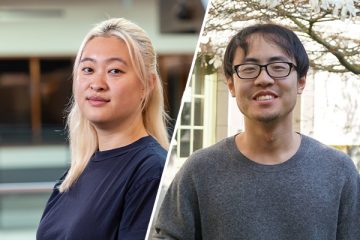
Allen School faculty recognized 2025 alumni Wei and Zhu for their outstanding doctoral dissertation research identifying new methods for tackling online harassment introducing more secure techniques for generating digital signatures, respectively.
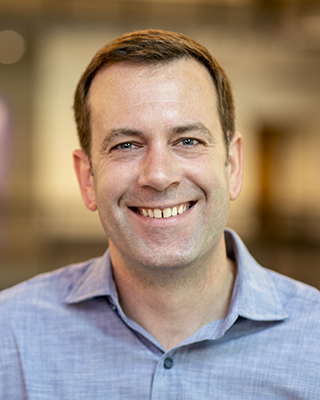
Li (B.S., ‘13) and his collaborators received the award for resolving a foundational problem in robust statistics, proving that a broad class of high-dimensional statistical problems can be both efficiently and robustly solved, even when some of the data has been corrupted.
Advances in low- and no-power sensing, communication and interaction technologies offer new possibilities for blending digital innovation with our physical environment.
From gesture recognition that allows people to interact with objects in new ways, to low-power sensors that collect and transmit data about temperature, air quality, urban accessibility and more, our researchers are tapping into the potential of computation to transform how we experience the world around us.
In their 2017 paper, Roesner and her co-authors were among the first to investigate end-user security and privacy perspectives on then-emerging smart home technologies and recommend ways to help users make more informed security decisions.
Itani, who works with Allen School professor Shyam Gollakota in the Mobile Intelligence Lab, was recognized for exceptional early-career research advancing AI systems for “superhuman” hearing.
A technology known as semantic hearing developed in Allen School professor Shyam Gollakota’s lab could let users create acoustic bubbles, isolate chosen voices, and control individual sounds in their environment.
Our work in human-centered computing explores and enhances the ways in which people and communities engage with and experience technology.
Our research considers the personal, educational, cultural, and ethical implications of innovation. Drawing upon techniques from human-computer interaction, learning sciences, sensing and more, we aim to maximize the potential benefits of technology while minimizing potential harms to individuals, groups and society.
In their 2017 paper, Roesner and her co-authors were among the first to investigate end-user security and privacy perspectives on then-emerging smart home technologies and recommend ways to help users make more informed security decisions.
To help shed light over safety and security concerns with current AI systems, UW News spoke with researchers including professors Franziska Roesner and Noah A. Smith.
In the first installment of a new Q&A series exploring grand challenges in computing, Reinecke and Smith discuss how they and their colleagues aim to answer the question, “How do we design AI in a way that is transparent and equally beneficial to all?”
When imagining the future of technology, sometimes all we need to do is look out the window — or into a microscope.
Our researchers take inspiration from nature to redefine what a computer can be, from data storage using synthetic DNA, to sensors modeled on insects and leaves. We also advance technologies to help solve biology’s biggest mysteries, such as computational approaches for understanding the mechanisms of disease and brain-computer interfaces that can restore or augment physical function and mobility.
Professors Andrea Coladangelo, Matthew Golub, Ranjay Krishna, Chinmay Nirkhe, and Stephanie Wang are shaping the future of computing through projects spanning AI, systems, computational neuroscience, cryptography and quantum computing.
Itani, who works with Allen School professor Shyam Gollakota in the Mobile Intelligence Lab, was recognized for exceptional early-career research advancing AI systems for “superhuman” hearing.
A technology known as semantic hearing developed in Allen School professor Shyam Gollakota’s lab could let users create acoustic bubbles, isolate chosen voices, and control individual sounds in their environment.
The Allen School’s tenure-track and teaching faculty members are at the forefront of innovation — both in the lab and in the classroom.
Our faculty, which is approaching 100 members strong, has been widely recognized for their contributions advancing the field of computing while preparing students to be the leaders and innovators of tomorrow. Among them are 27 Sloan Research Fellows, 52 recipients of National Science Foundation (NSF) CAREER or Presidential/NSF Young Investigator awards, three Presidential Early Career (PECASE) Award honorees, eight TR35 Award winners, and multiple individuals honored for advancing specific areas of the field. We also have 14 Fellows of the ACM, 9 Fellows of the IEEE, and two members of the National Academies, signifying our faculty’s career-spanning leadership and service to the scientific and engineering communities.
While they are lauded for their research contributions, our faculty members are first and foremost educators. Five professors have received the University of Washington Distinguished Teaching Award, and we were the first unit on campus to earn the UW’s Brotman Award for Instructional Excellence.