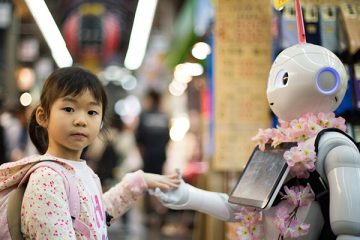
Our work in human-centered computing explores and enhances the ways in which people and communities engage with and experience technology.
Our research considers the personal, educational, cultural, and ethical implications of innovation. Drawing upon techniques from human-computer interaction, learning sciences, sensing and more, we aim to maximize the potential benefits of technology while minimizing potential harms to individuals, groups and society.
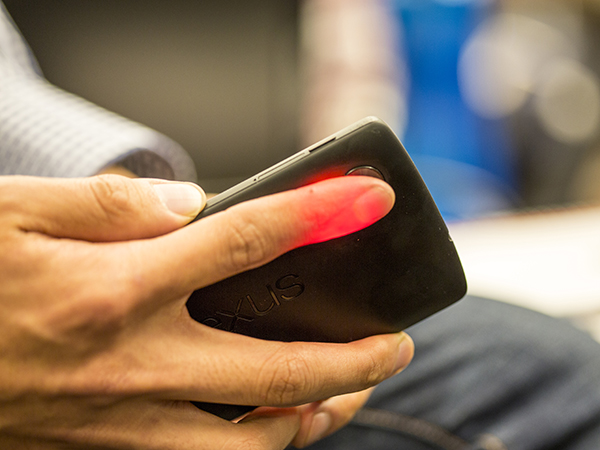
The Ubiquitous Computing (UbiComp) Lab develops innovative systems for health sensing, low-power sensing, energy sensing, activity recognition and novel user interface technology for real-world applications.
Global Innovation Exchange is the University of Washington’s
engineering and business institute for emerging and established
technology leaders. GIX partners with corporate, government and non-profit organizations to deliver transformational learning through graduate education, global experiences and professional development programs.
DFab is a network of researchers, educators, industry partners, and community members advancing the field of digital fabrication at UW and in the greater Seattle region.
To help shed light over safety and security concerns with current AI systems, UW News spoke with researchers including professors Franziska Roesner and Noah A. Smith.
In the first installment of a new Q&A series exploring grand challenges in computing, Reinecke and Smith discuss how they and their colleagues aim to answer the question, “How do we design AI in a way that is transparent and equally beneficial to all?”
Allen School faculty recognized 2025 alumni Wei and Zhu for their outstanding doctoral dissertation research identifying new methods for tackling online harassment introducing more secure techniques for generating digital signatures, respectively.