
Our study of the theoretical foundations of computing spans algorithm design and analysis, complexity, optimization, cryptography, quantum and more.
We seek to answer fundamental and long-standing questions about the capabilities and limitations of our field, which has practical implications in economics, logistics, social welfare, transportation and many other real-world domains.
Groups & Labs
Accessible Accordion
Areas of Expertise
Societal Impact
Results will appear in alphabetical order.

Cryptography Research Group
The Cryptography Group advances the foundations and applications of cryptography, including public-key and symmetric cryptography, obfuscation, attribute-based and functional encryption, secure multi-party computation, quantum cryptography and more.

Database Group
The UW Database Group does theoretical, systems and user-centered work in multimodal database management systems; generative AI and data management; complexity of query evaluation and optimization; scalable, interactive data visualization; and more.

Quantum Group
The Quantum Group does research on a variety of topics in quantum information and computation (primarily on the theory side), including quantum complexity theory, error-correction, cryptography, algorithms, and learning.

Theory of Computation Group
The Theory of Computation Group makes progress on fundamental problems in computer science, including algorithms, optimization, cryptography, quantum and more, to understand and expand the limits of the field.
Highlights
Allen School News
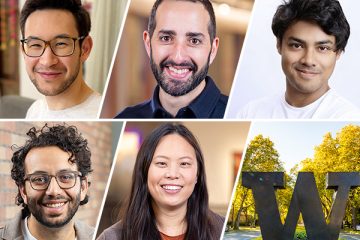
Professors Andrea Coladangelo, Matthew Golub, Ranjay Krishna, Chinmay Nirkhe, and Stephanie Wang are shaping the future of computing through projects spanning AI, systems, computational neuroscience, cryptography and quantum computing.
Allen School News
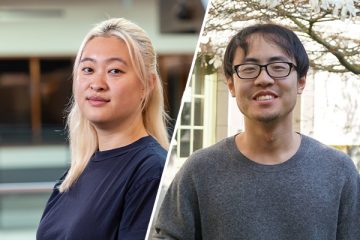
Allen School faculty recognized 2025 alumni Wei and Zhu for their outstanding doctoral dissertation research identifying new methods for tackling online harassment introducing more secure techniques for generating digital signatures, respectively.
Allen School News
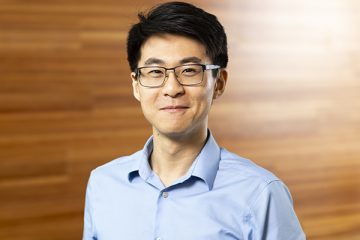
Li (B.S., ‘13) and his collaborators received the award for resolving a foundational problem in robust statistics, proving that a broad class of high-dimensional statistical problems can be both efficiently and robustly solved, even when some of the data has been corrupted.