Allen School researchers are at the forefront of exciting developments in AI spanning machine learning, computer vision, natural language processing, robotics and more.
We cultivate a deeper understanding of the science and potential impact of rapidly evolving technologies, such as large language models and generative AI, while developing practical tools for their ethical and responsible application in a variety of domains — from biomedical research and disaster response, to autonomous vehicles and urban planning.
SAMPL is an interdisciplinary machine learning research group exploring problems across the system stack, including deep learning frameworks, specialized hardware for training and inference, new intermediate representations and more.
The Robot Learning Lab works on foundational research in machine learning, AI and robotics to develop intelligent robotic systems that can perceive, plan and act in complex environments and improve performance with experience.
IFDS organizes its research around four core themes: complexity, robustness, closed-loop data science, and ethics and algorithms. By making concerted progress on these fundamental fronts, IFDS aims to lower several of the barriers to better understanding of data science methodology and to its improved effectiveness and wider relevance to application areas.
The Science Hub supports a broad set of programs — including fellowships for doctoral students, collaboration among researchers and support for collaborative research events — designed to accelerate artificial intelligence (AI), robotics and engineering in the Seattle area.
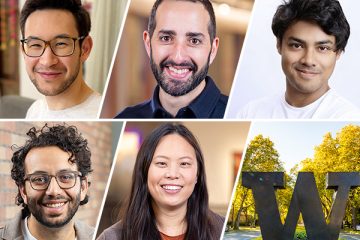
Professors Andrea Coladangelo, Matthew Golub, Ranjay Krishna, Chinmay Nirkhe, and Stephanie Wang are shaping the future of computing through projects spanning AI, systems, computational neuroscience, cryptography and quantum computing.
To help shed light over safety and security concerns with current AI systems, UW News spoke with researchers including professors Franziska Roesner and Noah A. Smith.
In the first installment of a new Q&A series exploring grand challenges in computing, Reinecke and Smith discuss how they and their colleagues aim to answer the question, “How do we design AI in a way that is transparent and equally beneficial to all?”